
breakfast
No Kid Hungry Arkansas
Trabajando para eliminar el hambre infantil llegando a los niños donde viven, trabajan y juegan.
Out-of-School
Más información >
Educación nutricional
Más información >
Breakfast makes a difference

Celebrate School Breakfast Month with Your District
March is the perfect time to shine a spotlight on the importance of school breakfast! A healthy morning meal helps students stay focused, energized, and ready to learn.
We’ve created a toolkit packed with resources to help school districts across the state to celebrate School Breakfast Month and encourage more students to start their day with breakfast. Inside you’ll find:
- Social media graphics and captions
- Ready-to-text graphic and message
- Flyers and posters for schools and families
Use these materials to spread the word about your school breakfast program and help more Arkansas students start their day with a nutritious meal.
All materials are available in both English and Spanish.
“If it had not been for the Hunger Relief Alliance and Arkansas No Kid Hungry campaign, I would have never heard of Breakfast in the Classroom—a program that costs us nothing, that makes our grades better, our attendance better, and our discipline better.” Matt Mellor, Principal, Lawson Elementary School, (PCSSD) Little Rock, AR. “If it had not been for the Hunger Relief Alliance and Arkansas No Kid Hungry campaign, I would have never heard of Breakfast in the Classroom—a program that costs us nothing, that makes our grades better, our attendance better, and our discipline better.”
“With the 2nd Chance Breakfast program, we average around 100+ students eating breakfast who would not have an opportunity to eat until lunch. This program is good for our students who arrive at the first bell and for those who are late. In addition to late arrivals, we have 75-100 students who come to school after a morning session at our local college, and these students take advantage of the program as well. Many times, we have buses that arrive at the first bell or arrive late, and the 2nd Chance Breakfast allows us to send these students on to class with the knowledge that they can eat breakfast after second period. Great program!”
Hungry children struggle in the classroom, and barriers such as social stigma, long cafeteria lines, transportation issues, and busy class schedules often keep the very students who need it most from eating breakfast at school.
The Alliance works with school districts across the state to improve the participation rates of their school breakfast programs by implementing alternative breakfast delivery models like Breakfast in the Classroom, Grab & Go, and Second Chance breakfast.
GOOD THINGS HAPPEN WHEN SCHOOL BREAKFAST IS A PRIORITY
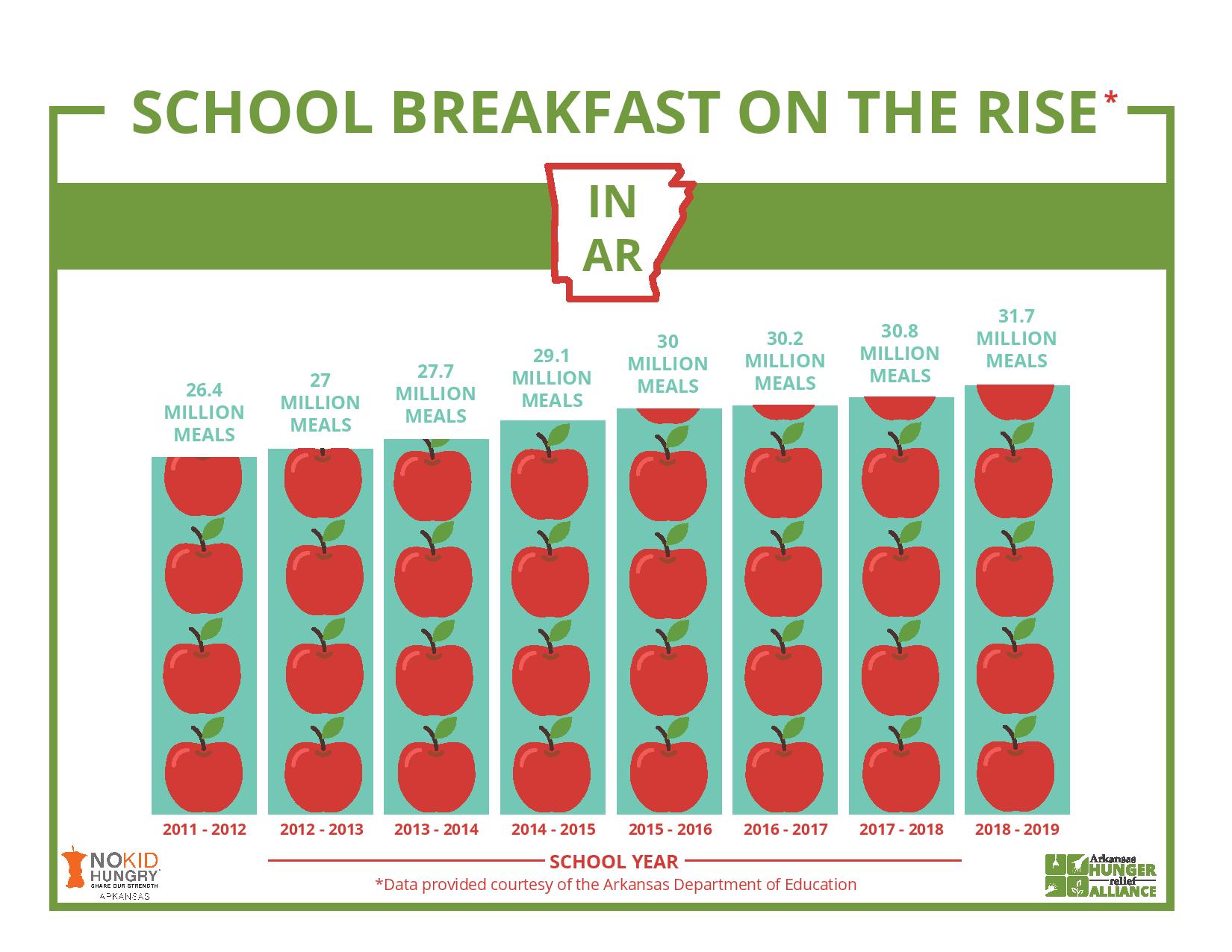
The number of breakfast meals served to Arkansas students has risen steadily since the 2011-2012 school year. This despite relatively stable enrollment figures over the whole period. This rise corresponds to the emphasis by the Arkansas No Kid Hungry campaign and its stakeholders on increasing school breakfast participation. The result? More students are getting a good start to their days.
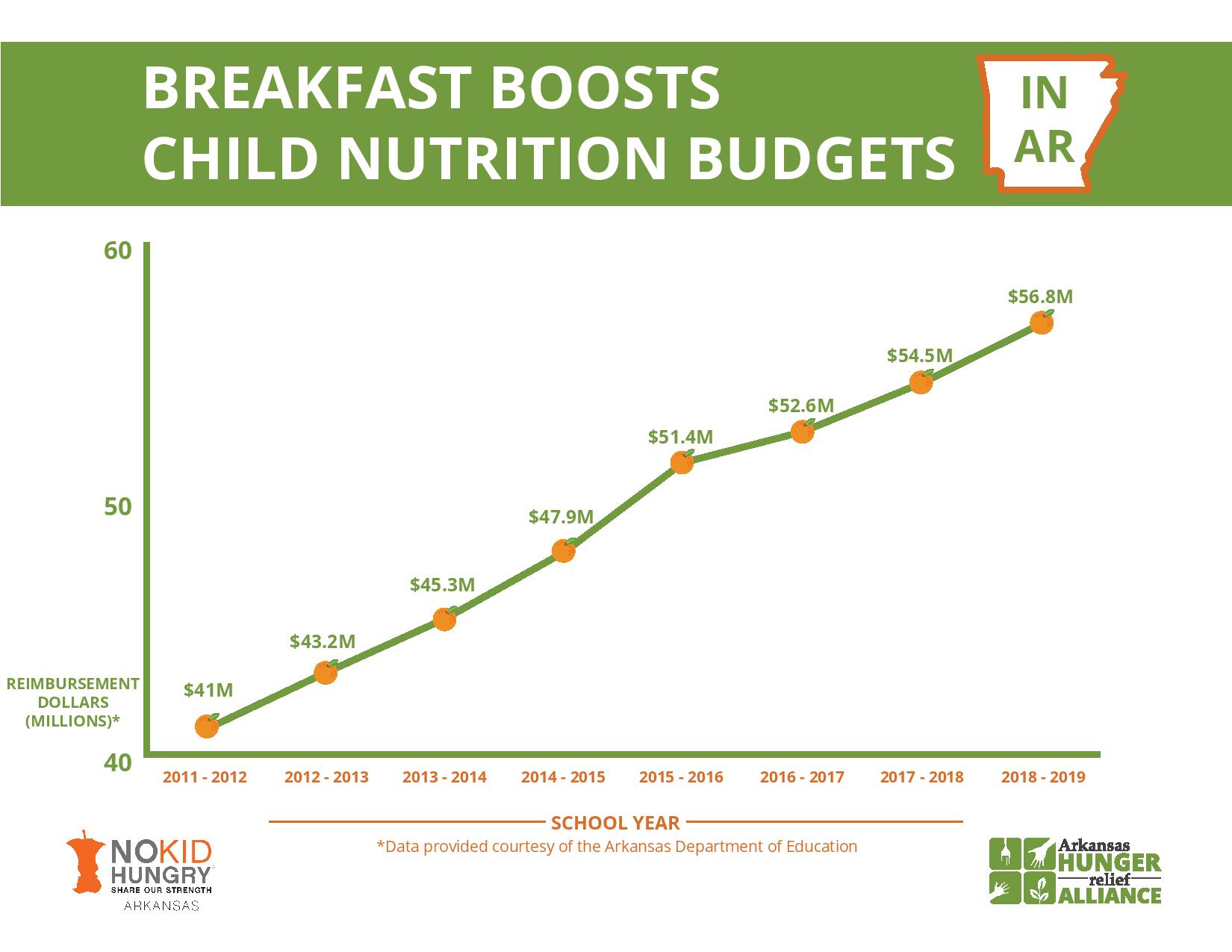
The other benefit of increasing breakfast participation is that more federal reimbursement dollars are going into struggling child nutrition department budgets. This allows the purchase of higher quality food and added staff.
Watch the Breakfast After the Bell: An Everyday Part of Learning video and find out what other superintendents, principals, and child nutrition directors are saying about Breakfast-After-the-Bell programs in their schools.
SCHOOL BREAKFAST IS KEY TO STUDENT SUCCESS
Improved Children’s Diets
Breakfasts served as part of the School Breakfast Program provide key nutrients children need every day—and updated nutrition requirements established under the Healthy, Hunger Free Kids Act of 2010 have amplified these benefits.
All meals meet nutrition guidelines that limit sodium and saturated fats and eliminate trans fats.
Children who participate in school breakfast are more likely to consume diets that are adequate or exceed standards for important vitamins and minerals than those who do not eat school breakfast or who have breakfast at home.
Children and adolescents who eat school breakfast are significantly less likely to be overweight, while skipping breakfast is associated with a higher risk of obesity.
School breakfast also helps build lifelong healthy eating habits
Improved Academic Performance
- Children who eat breakfast at school – closer to class and test-taking time – perform better on standardized tests than those who skip breakfast or eat breakfast at home.
- The School Breakfast Program is an important tool for educators to ensure that students have adequate nutrition to learn and thrive and not be distracted by hunger or lack of proper nutrition in the classroom.
Fewer Behavioral Problems
Students who participate in school breakfast exhibit decreased behavioral and psychological problems and have lower rates of absence and tardiness.
Providing students with breakfast in the classroom is associated with fewer disciplinary office referrals
RESOURCES YOU CAN USE
To get started, visit our partner No Kid Hungry’s website to learn about best practices.
COMMUNITY ELIGIBILITY PROGRAM
ENSURING ALL KIDS EAT BREAKFAST AND LUNCH Please note that all CEP information included here is currently superseded by COVID-specific requirements.
The Community Eligibility Provision (CEP) makes it easier for high need schools to serve free meals—both breakfast and lunch—to all students by removing the need for schools to collect paper applications. Because implementing community eligibility means schools are serving breakfast to all students at no charge, it is a great way to maximize the benefits of breakfast models such as Breakfast in the Classroom, Grab & Go and Second Chance Breakfast. Schools and nutrition advocates should work together to plan how they will implement this provision. When you feed kids nutritious food, good things happen.
For more information about Community Eligibility, visit our partner Food Research & Action Center’s website.
BENEFITS OF COMMUNITY ELIGIBILITY
Community eligibility has a number of benefits to students and schools. It helps schools reduce administrative costs related to collecting and processing applications and tracking students based on meal eligibility status. Participating schools no longer have to collect payments during the meal service. It can also reduce stigma because all students are eating meals at no cost, regardless of their income status.According to an analysis from the Center on Budget and Policy Priorities and the Food Research and Action Center, the first three community eligibility pilot states, Illinois, Michigan, and Kentucky, have already seen success. Schools participating in CEP in these three states saw an increase in lunch participation of 13 percent and an increase in breakfast participation of 25 percent.
Urge your school principal or superintendent to sign up for the Community Eligibility Program. It’s the best way to make sure all of our kids get the nutritious meals they need.
Check out this great article from the Arkansas Times on CEP and the real life effects it’s having on an Arkansas school.

¿Está usted en necesidad?
Nos gustaría ayudarle a encontrar los recursos que necesita.

Contacto
200 West Capitol Avenue, Suite 1300
Little Rock, Arkansas 72201
Boletin informativo
Alliance Alert se envía a los miembros, defensores y otras personas que desean mantenerse al tanto de los problemas del hambre en Arkansas. Vea nuestro último boletín.
enlaces rápidos
All Rights Reserved | Diseño de sitio web por Rock City Digital